
Quantum Systems and Recce-Strike in Ukraine's Drone Warfare
German drone producer became part of Ukraine's defence ecosystem

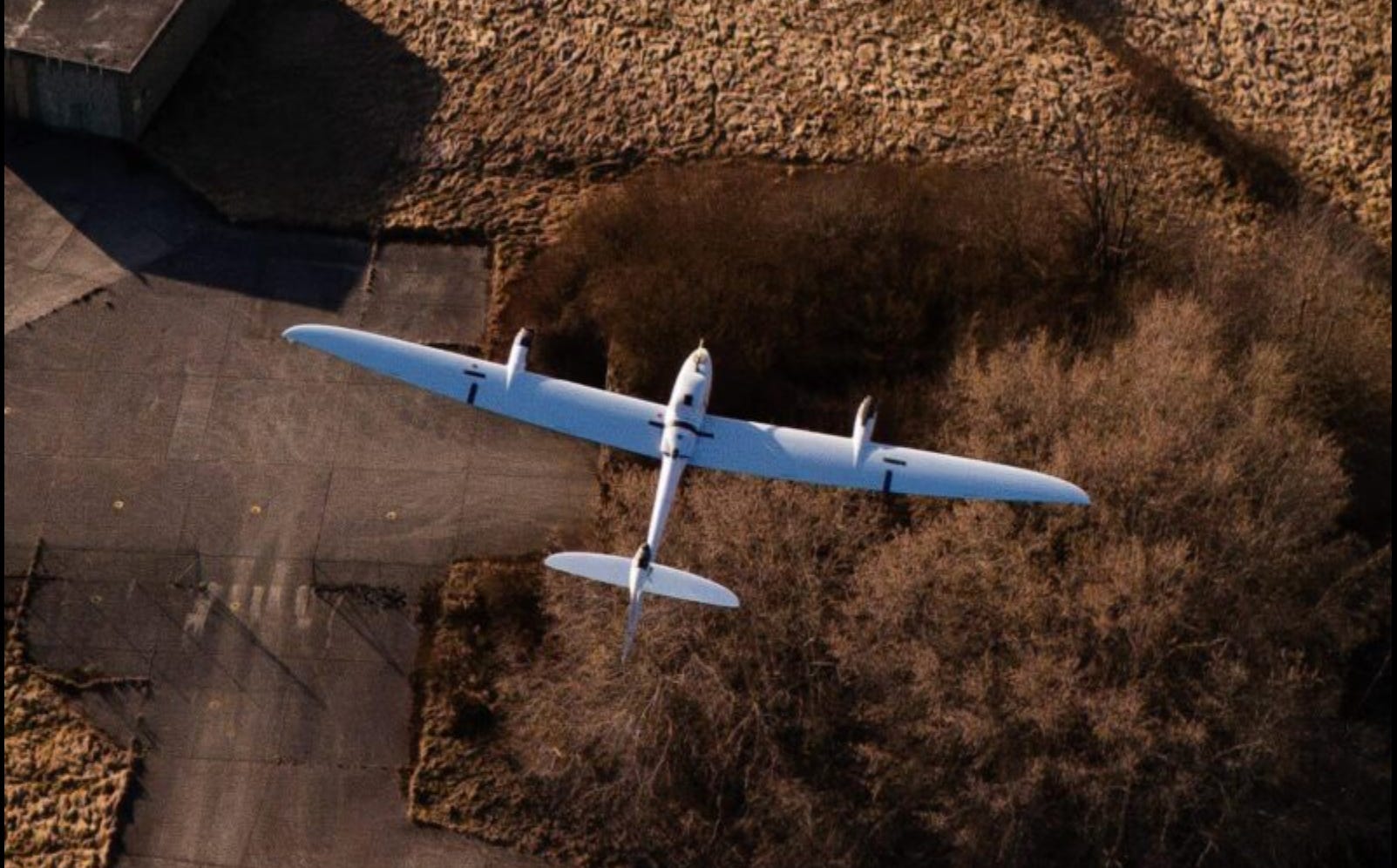
The iteration cycle for drones in Ukraine is just 4–6 weeks. To keep pace with this rapid development, many Western companies have established production facilities in the country. German drone manufacturer Quantum Systems is producing its Vector reconnaissance drones in Ukraine: the company opened a factory in April 2024, and now a network of its facilities manufactures 40–80 Vectors per month. Also, Ukraine became the first global user of the new Vector AI drones, equipped with the computing power to identify and track targets, as well as coordinate swarming and strike missions.
Quantum Systems is a company I’ve been wanting to write about for a while, and this time I was fortunate to receive a couple of comments directly from them.
Just a reminder: my publications are entirely independent and not sponsored. This digest is supported only by private individuals — readers and subscribers like you.
Quantum Systems and their Vector Drones
Quantum Systems began as a manufacturer of agricultural drones in 2015. In its third year, the company launched the development of the dual-use Vector drone, which entered serial production in 2020.
Vector drones were among the first donated to Ukraine as humanitarian aid in the initial weeks of Russia's full-scale invasion in early 2022.
Since 2022, QS has expanded its presence by opening facilities across Ukraine, complementing its existing production and delivery lines in Germany, the United States, and Australia.
Vector is an eVTOL fixed-wing ISR drone, making it ideal for long endurance missions at penetration depths of ~50km in Ukraine. Fixed-wing drones are larger, can fly longer distances, and are equipped with more advanced optics.
A distinctive feature of QS drones is their ability to take off vertically like helicopters and then transition into horizontal flight like airplanes.
According to soldiers operating these UAVs, the biggest advantage of the Vector drone is its camera.
"It has three daytime cameras with different optical zoom levels. That means it has a 44x optical zoom, and for every 10–15 levels of zoom, there is a separate daytime camera. During daytime flights, we can also turn on the thermal imager at the same time and, for example, check activity in a tree line," one operator explained.It is noted that the farthest distance this crew has flown the Vector drone was over 40 km. However, the range depends on conditions, and overall, the drone can penetrate 45–47 km deep into enemy territory.
According to a Ukrainian soldier, the drone can remain airborne for 2 hours to 2 hours 15 minutes when operating on standard batteries.Alongside the Vector, actively used by Ukraine’s defense forces, the company’s portfolio includes the electric VTOL drones Tron and Twister, the Trinity series, and the short-range tricopter Scorpion.
In August 2025, Quantum Systems delivered Vector AI reconnaissance drones to Ukraine. These are equipped with the Polish WASP acoustic system, designed to detect artillery fire at distances of up to 15 km.
Ukraine became the first user of this model.
The sensor "allows drone pilots to detect artillery and other weapons from a large distance by the sound they make,” Politico reported.
In an exclusive commentary to Ukraine’s Arms Monitor, Quantum Systems explained that the Vector AI features dual AI chips, giving the drone the necessary computing power to identify and track targets, as well as coordinate swarming and striking missions. Vector is also able to operate under GNSS-denied operations, which have become the norm in frontline operations in Ukraine.
“VECTOR AI is based on our learnings from Ukraine and the battlefront, since the beginning of our operations in 2022. It was developed by and with the help of our team in Ukraine. Iterations on our Vector drones can vary, with fast same-day software patches to longer-term hardware upgrades. But generally speaking, we are looking at an improvement and update every 4-6 weeks,” a QS representative added.
In terms of technical specifications, the new sensor can detect the direction of artillery or mortar fire at a range of up to 15 km, with an accuracy of 5 degrees at 5 km. This enables operators to quickly determine the approximate location of enemy artillery, which can then be precisely identified using the drone’s optical cameras.
Investment
In 2023, the company became a Diia.City resident, and opened a service, support, training, and logistics center in Ukraine. An R&D center was later added, and production in Ukraine was launched the following year.
Diia City is a legal and tax regime launched in February 2022. It aims to stimulate the development of technology businesses by creating favorable conditions for transparent business conduct, intellectual property protection, and tax burden reduction.
Currently, there are more than 2000 Diia City residents in Ukraine. To become a resident, a company must be registered under Ukrainian legislation, engage in certain activities (software development and testing, including GameDev; robotics; cybersecurity; design and production of UAVs and their components etc), meet the conditions for admission, and prepare a package of documents.
In May 2025, Quantum Systems raised €160 million in its Series C round, reaching unicorn status with a valuation of over $1 billion. In total, the company has attracted €310 million in investment.
The new funding will be used to:
Advance research and development of AI drone systems
Expand production
Grow the company’s presence in Europe, North America, and the Asia-Pacific region.
Service, Support, Training, and Logistics
In 2023, the task of the Quantum Systems Ukraine office was to establish the SSTLC — Service, Support, Training, and Logistics Center, covering maintenance, repairs, operator training, and logistics.
By 2024, QS Ukraine had repaired around 200 Vector systems, while more than 700 had been delivered to the Ukrainian Armed Forces. Losses accounted for roughly 10% of those supplied.
Day-to-day operations at SSTLC are designed for maximum speed and efficiency:
First-line support involves direct communication with pilots and commanders to gather full damage reports. With its own fleet of vehicles, the team can collect damaged UAVs from agreed frontline locations as early as the next day. Operators also receive ongoing assistance through Signal support groups and a dedicated pilot portal with all necessary guidance.
Second-line support is now fully localized in Ukraine. Previously, damage reports were forwarded to German engineers, but today most cases are handled domestically, with the German office stepping in only when needed. This localized approach has significantly accelerated response times.
Cooperation with Ukrainian Producers
Quantum Systems Ukraine is now an integral part of the Ukrainian drone ecosystem and is cooperating with a number of partners in the country. Most notably with the Ukrainian company Frontline.
This July, Frontline, which develops drones and combat modules, signed a memorandum of partnership with QS.
Their plans include joint R&D efforts, integrating Ukrainian technologies into European defense systems, and scaling up production in Ukraine.
Frontline representatives told AIN that the company’s products are planned to be integrated into Quantum Systems’ drones, including the VTOL models Vector and Twister, as well as into the Drone Port infrastructure for real-time autonomous reconnaissance.
During the Joint Ventures, Joint Defence forum in Lviv this August, Oleksandr Berezhnyi, Managing Director of Quantum Systems Ukraine, stated that QS is looking for projects, teams, and products to invest in. “This year, we invested in Frontline — a Ukrainian company developing a replacement for the Mavic and targeting the U.S. market. We have also advanced the concept of modularity and a platform that can integrate both Ukrainian and European components, including software. Our computing power allows for running additional applications on this platform. That is why we are constantly seeking partners in Ukraine.”
Successful Cases
The joint operation of Virtus and Vector drones demonstrated how reconnaissance data can be turned into results within minutes.
A video released on August 23 shows the coordinated use of reconnaissance and strike drones. The demonstration featured the Vector UAV from Quantum Systems and the Virtus UAV from Stark.
In the footage, Ukrainian soldiers launch the reconnaissance drone, which flies over an unspecified sector of the Zaporizhzhia front. The drone hovers over the area while the operator scans for targets. Eventually, the barrel of Russian equipment is spotted among the foliage. Moments later, soldiers quickly launch the Virtus strike UAV (with vertical takeoff), which destroys the enemy object.
This case shows how the Ukrainian Armed Forces are applying the recce-strike concept (reconnaissance + strike or hunter-killer), implemented in multidomain operations.
Caliber Defence reports (referring to the original article by Waldemar Geiger in German) that the Ukrainian recce-strike approach is designed to let small, self-sufficient, low-signature squads conduct independent missions against high-value targets without relying on other units or higher command.
Such squads usually consist of only a few soldiers using one or two pickup trucks to set up near the front and begin airborne reconnaissance.
The reconnaissance drone is carried to an open area under the cover of a gunner—protection against FPV drone threats—and then launched.
The Vector UAV scouts enemy territory for targets; in this case, it identified a self-propelled howitzer hidden in a wooded area. The squad then independently launched a Virtus loitering munition to strike the target.
The Virtus, also carried to the open area, requires “marrying” to a warhead before launch. While this may appear to slow operations, Stark managers emphasize it as an advantage, as it lets squads tailor the warhead to the target—using a shaped-charge for armour or fragmentation for unprotected assets.
As radio and navigation signals are disrupted throughout the operational area, the Virtus is guided to the target using computer vision-based waypoint navigation. The hunter-killer squad uses the same laptop for both drones.
Separately, in July, a Vector unmanned aerial vehicle operated by Ukrainian forces was struck 11 times by small arms fire during a recent combat mission but still managed to return for repairs, Quantum Systems CEO Dave Sharpin reported. The mission was aborted only after “the gimbal took a direct hit,” he noted. Despite the damage, the UAV successfully made it back.
The company plans to expand in Ukraine. A German government international technical assistance program covers the costs of service, support, R&D, training, and logistics. The company’s own funds are directed toward building up production and expanding the team.
Additionally, achieving unicorn status could strengthen communication with both the Ukrainian government and foreign partners.
Read my recent articles on defence tech in Ukraine:
Ukraine is the future of advanced warfare not by choice
These details increase my understanding of what a new battlefield looks like now and why Putin is relying on shear volume of drones without the same technical advances. Thank you